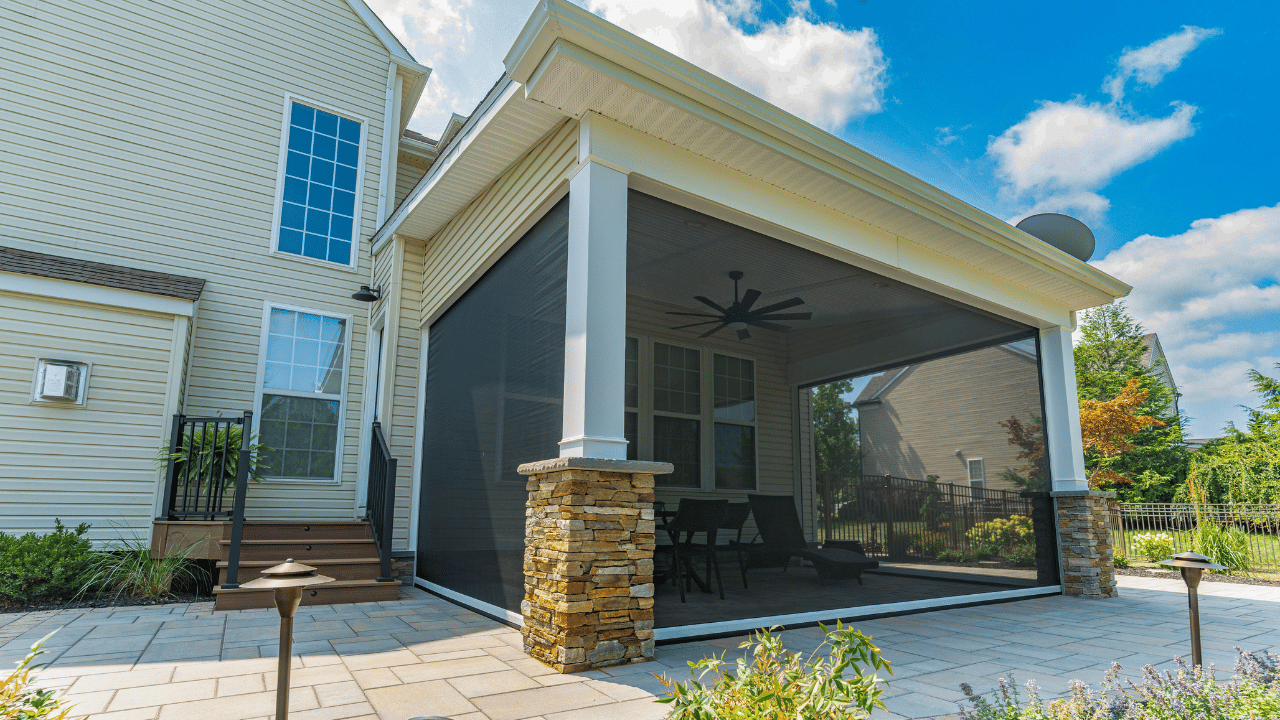
If you’ve invested in a beautiful patio, poolside pavilion, or outdoor kitchen, you already know how quickly insects, glare, and unpredictable weather can cut an evening short. Motorized retractable patio screens solve that problem with a simple press of a button. These motorized retractable screens drop quietly from a slim cassette housing to enclose your outdoor living space, then disappear completely when you want an open-air feel.
Quick Overview: Why Motorized Patio Screens Are Worth It
The concept is straightforward. A motorized screen rolls down on demand from a housing mounted above your patio, porch, or pavilion opening. When you no longer need it, the screen retracts into its cassette and becomes virtually invisible. No cranking, no wrestling with fabric, no visual clutter.
The core benefits are immediate: insect protection that keeps mosquitoes and gnats out without blocking airflow, UV protection and glare control that make west-facing patios usable in the afternoon, light wind and drizzle shielding that extends your time outside, and added privacy from neighboring properties. Motorized screens can extend outdoor living seasons by months, turning a three-season space into something you’ll actually use from April through October.
At Western Lehigh Services, Inc., based here in the Lehigh Valley, PA, we design and build complete outdoor living spaces, and we integrate Phantom Screens as our preferred motorized screen solution. The rest of this article covers cost ranges, mounting options, materials like insect mesh and clear vinyl, and how these systems pair with patios and pools.
What Are Motorized Retractable Patio Screens?
Motorized screens are exterior roll-down screens powered by a quiet electric motor, designed specifically for large outdoor openings. Unlike basic retractable screen doors or interior roller shades, motorized patio screens are built for scale and weather exposure. They feature exterior-grade aluminum frames, heavy duty side tracks that keep fabric taut, and components rated for sun, rain, temperature swings, and wind.
The main parts of a motorized screen system include:
- Cassette housing – a slim aluminum enclosure that conceals the roller and fabric when retracted
- Tubular motor – mounted inside the roller tube, driving smooth raise and lower cycles
- Side tracks or guide cables – channels that capture the screen edges, preventing blow-outs and sealing gaps
- Heavy duty bottom bar – an extruded aluminum bar at the leading edge that provides tension and a clean seal at the floor or sill
- Controls – handheld remote, wall switch, or smartphone app integration
Motorized patio screens can span openings up to 30 feet wide and heights up to 16 feet, making them suitable for substantial covered patios. Picture a 16′ × 10′ covered patio opening in Allentown or Bethlehem fully enclosed by a single screen that retracts into a housing barely five inches deep. When raised, it’s nearly invisible. When lowered, it creates a defined, comfortable room.
How Motorized Retractable Screens Work
At the mechanical level, a tubular motor inside the cassette turns a roller tube. The screen fabric wraps around this tube when retracting and unrolls smoothly when deploying. Side tracks maintain tension along both edges so the mesh stays flat and taut, even in a breeze.
Control is where the daily convenience lives. Most homeowners use a remote controlled handheld device or a wall-mounted switch. Premium motors often integrate with home automation systems like Lutron or Crestron, so you can add screens to scene controls or operate them through a smartphone app. Motorized screens often require power installation planning – a dedicated low-voltage line run to the housing location – which is why it helps to coordinate electrical work during initial construction.
Phantom Screens equips their motorized systems with Somfy motors that include soft start/stop to reduce stress on the fabric and hardware, obstacle detection sensors that stop the motor if something blocks the screen path, and limit settings that prevent overtravel. The result is effortless operation that’s safe for all ages.
Here’s what daily use looks like:
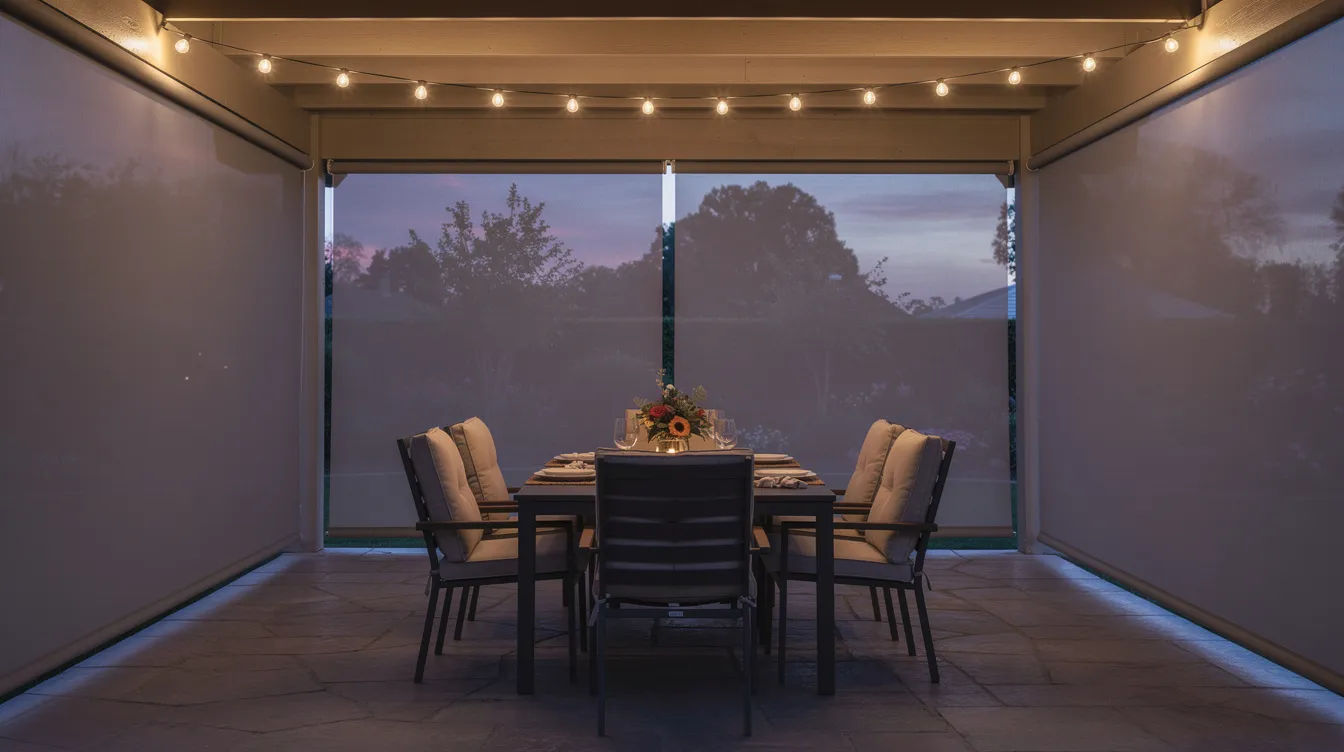
- You tap the remote before dinner on a July evening
- The screen lowers quietly – most guests won’t even notice the motor
- Insects stay out, airflow continues through the mesh, and glare softens
- After guests leave, one more tap and the screen retracts into the housing, hidden until next time
Three words that define the experience: Effortless. Quiet. Hidden when not in use.
Key Benefits for Your Outdoor Living Space
Lehigh Valley summers are hot and humid. Shoulder seasons bring cool winds, drizzle, and rapidly changing conditions. Motorized retractable screens address all of these realities and transform your outdoor space into something you’ll use far more often.
Insect protection. Tight-weave mesh creates a full barrier across openings, keeping mosquitoes, gnats, flies, and wasps out while maintaining ventilation and clear views. Motorized retractable screens reduce insects and filter sunlight simultaneously.
Solar and glare control. Motorized screens block up to 95% of harmful UV rays, depending on the mesh type selected. This protects skin, furniture, and finishes while keeping temperatures noticeably lower. They can reduce cooling costs by 25–49% when shading adjacent interior spaces.
Extended outdoor season. Screens let you use patios, covered decks, and poolside pavilions more days per year. When paired with heaters or a fireplace, a screened pavilion functions like a three-season room well into October and as early as late March.
Privacy. Close the screens and your patio becomes a defined outdoor room rather than an open stage. Motorized screens provide instant privacy at the touch of a button.
Furniture and finish protection. UV exposure degrades cushions, wood, stone sealant, and stainless steel over time. Screens dramatically slow that process.
Indoor comfort. By shading glass doors and windows that open onto a patio, screens reduce solar heat gain inside your home, easing the load on your HVAC system.
Imagine hosting summer evenings outdoors, watching a game on the patio TV without glare, or having a quiet morning coffee without a single mosquito. That’s what motorized screens deliver.
Insect Protection: Enjoy the Outdoors Without the Bugs
Pennsylvania’s warm months bring a predictable lineup of pesky insects: mosquitoes near wooded lots and water features, gnats around landscaping beds, flies near outdoor kitchens, and wasps around eaves and pergola structures. Standard insect mesh balances visibility with bug protection, using a fine weave tight enough to block even small pests while allowing air circulation and outward visibility. Mesh screens typically feature weaves of 17×13 or 20×20, with apertures small enough to stop mosquitoes.
Motorized screens provide insect protection without obstructing views. The combination of side tracks and a sealed heavy duty bottom bar prevents bugs from sneaking in along the edges – a common problem with cheaper, track-free alternatives. They protect against insects while maintaining airflow, so your screened patio doesn’t feel stuffy.
Consider a concrete example: a homeowner in Emmaus has a 14-foot-wide covered patio opening. During July dinners, citronella candles and chemical foggers are the only way to keep mosquitoes manageable. After installing a motorized insect screen across that opening, the family enjoys bug-free meals every evening without chemicals, candles, or disrupted conversation.
The tighter weave of quality insect mesh also filters out smaller pests like midges and no-see-ums that are common near Lehigh Valley streams and ponds, making the screen effective where it matters most.

Sun, Heat, and Weather Control
Solar mesh options are engineered specifically for sun protection, blocking 80% to 90% of UV rays while maintaining reasonable outward visibility. This differs from standard insect mesh, which prioritizes airflow and insect exclusion over solar control. Motorized screens can block up to 95% of harmful UV rays when using higher-density solar fabrics, protecting both your skin and outdoor furnishings from damage.
The comfort difference is measurable. On a south-facing paver patio in Macungie that catches intense afternoon sun, solar mesh screens can lower the perceived temperature by several degrees, reduce glare on outdoor kitchen surfaces and a mounted TV, and protect wood, fabric, and stone finishes from premature fading. Motorized screens can reduce cooling costs by 25–49% by shading glass doors and windows that adjoin the patio.
Screens also help break up breezes and offer some protection from light rain, allowing Lehigh Valley homeowners to stay outside during brief showers rather than scrambling to move everything indoors. Wind resistance is a key consideration for outdoor screens – standard screens withstand wind loads of 25–50 mph, and quality motorized systems can withstand winds up to 50 mph. For harsh weather conditions or stronger gusts, environmental sensors can auto-retract the screen to protect the fabric.
Seasonal flexibility matters here. In July, you want maximum ventilation with solar control. In April or October, clear vinyl panels can create a more enclosed feel, blocking wind and drizzle while preserving views. The right setup turns unpredictable weather into a minor detail rather than a dealbreaker.
Privacy and Outdoor Room Feel
Different mesh openness levels let you calibrate exactly how much privacy you want. A mesh with a lower openness factor (more tightly woven) obscures the view into your space from the outside while still giving you a clear line of sight outward. Darker mesh colors reduce glare and improve visibility from the inside, functioning almost like sunglasses for your patio.
Picture a patio that backs up to neighboring yards. With the screens up, you’re fully visible. Lower the screens, and the space feels enclosed, private, and defined – more like an outdoor living room than an exposed deck. The same principle applies to a poolside pavilion visible from the street: screens create a visual boundary without building a wall.
Closing motorized screens psychologically “defines” the room. Guests sit differently, conversations relax, and the space starts to feel like a genuine extension of your home’s interior. It’s a subtle shift, but homeowners consistently describe it as one of the most satisfying aspects of having screens installed.
Screen Materials: Insect Mesh, Solar Fabrics, and Clear Vinyl
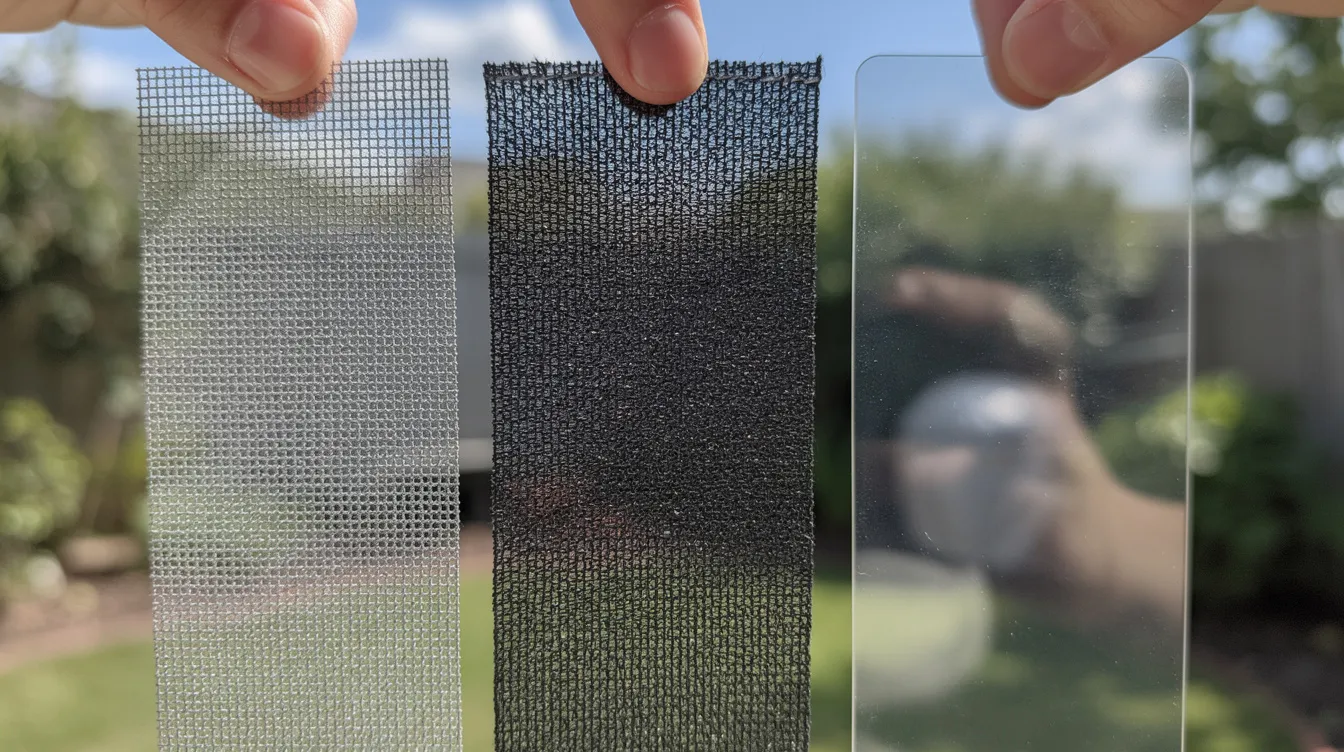
Choosing the right mesh type is crucial for functionality. The three main material families each serve a different primary purpose, and many projects combine two or more types across different openings.
Insect Mesh
Traditional insect mesh uses a fine fiberglass or PVC-coated polyester weave. It delivers excellent insect protection with high airflow and minimal view obstruction. This is the go-to choice for summer evenings when bugs are the primary concern and you want maximum ventilation through the screen. Fabrics are lightweight and durable, with standard colors available in charcoal, black, and grey that match most exterior finishes.
Solar Mesh
Solar fabrics are slightly heavier, with a tighter weave designed to cut glare and reduce heat transmission. Phifer’s solar insect screening, for example, weighs approximately 7.0 oz/yd² and blocks up to 65% of solar heat and glare while maintaining around 32% openness. Fabric options range from lighter weaves that prioritize view to denser weaves that maximize sun protection and uv protection.
Clear Vinyl Screens
Clear vinyl panels create a more enclosed, three-season feel. They block wind, rain, and cold air while preserving clear views through the panel. Vinyl screens can withstand winds up to 200 MPH in some configurations, making them remarkably durable in harsh weather conditions. Clear vinyl screens are ideal for shoulder seasons when you want to keep using your outdoor space without the chill.
Western Lehigh Services can recommend specific fabric and clear vinyl combinations based on your outdoor space’s orientation, intended use, and design aesthetic. We bring samples to your property so you can see how each mesh option looks and feels in person before committing.
Mounting Options and Where Screens Can Be Installed
Mounting options determine how well the motorized screen system blends with your existing architecture and hardscaping. There are two primary approaches.
Surface-mount installations fasten the cassette housing and side tracks directly to the face of beams, stone columns, or wall surfaces. This is the most common retrofit approach for existing spaces like covered patios and pavilions, requiring minimal structural modification.
Recessed or hidden installations build the housing into ceiling pockets, roof overhangs, or column cavities. The screen is completely invisible when retracted – no visible cassette, no exposed tracks. This option works best during new construction or major renovation, where carpentry, masonry, and framing can be coordinated from the start. Accurate measurements are critical for effective installation, particularly with recessed mounting where tolerances are tight.
Common applications include:
- Covered patios and porches
- Pergolas with solid or louvered roofs
- Poolside pavilions
- Outdoor kitchens and bar areas
- Large window walls opening onto decks
Truck-mounted wiring hidden inside structural members enhances the aesthetic appeal of installations, keeping electrical conduit out of sight. Western Lehigh Services coordinates structure design, masonry, and carpentry to accommodate Phantom Screens neatly from the start of any project, whether it’s a brand-new patio build or an upgrade to an existing covered structure.
Integrating Screens into Custom Patios, Pools, and Outdoor Kitchens
Motorized retractable screens become most powerful when they’re part of a larger outdoor living design. At Western Lehigh Services, screens tie directly into our core services: custom in-ground concrete pools, paver and concrete patios, outdoor kitchens, and pavilion construction.
A typical project flow looks like this: design a new paver or concrete patio, add a roof structure or pavilion, then specify Phantom Screens to enclose key openings. The structural design accounts for housing depth, track placement, and electrical access from day one, so nothing is an afterthought.
Screens protect outdoor kitchens and bar seating from wind-blown leaves, insects, and sideways rain – especially when paired with clear vinyl in cooler months. A poolside pavilion in the Lehigh Valley might use solar mesh on the west-facing side to block late-afternoon sun, insect mesh on the sides facing landscaping, and a clear vinyl panel on the windward side for shoulder-season use.
Full-service landscape companies offer comprehensive project management, and project ownership leads to better quality control and craftsmanship. Western Lehigh manages the entire process – hardscape, structure, electrical, and motorized screen installation – under a single contractor, so you have one point of contact and one team accountable for results.
Motorized Screens vs. Manual Roll-Down Options
When comparing motorized systems to manual screens (crank-operated or pull-down shades), the key differences come down to convenience, fabric tension, and practicality at scale.
| Feature | Motorized Screens | Manual Screens |
|---|---|---|
| Operation | Remote, wall switch, or app | Hand crank or pull cord |
| Fabric tension | Consistent, motor-controlled | Varies, may sag over time |
| Best for large openings | Yes – practical up to 30’+ | Cumbersome above 10–12′ |
| Wind resistance | Zipper-track systems secure fabric edges to prevent blowing out | Basic edge retention only |
| Daily use likelihood | High – effortless operation | Lower – effort discourages use |
| Integration with upscale design | Clean, finished look | More utilitarian |
For oversize spans of 18–24 feet, manual options become impractical. The weight of the fabric makes cranking difficult, and uneven tension leads to sagging and flapping. Motorized retractable systems maintain proper tension across the full span, operate safely for users of all ages, and blend seamlessly with upscale outdoor living spaces. The remarkable versatility of motorized systems also means they integrate with sensors, timers, and home automation in ways manual screens simply cannot.
Manual screens have their place for small, single-door openings where budget is the priority. But for substantial outdoor living investments – the kind of patios, pavilions, and pool environments Western Lehigh builds – motorized screens are the practical, long-term choice.
Typical Cost Ranges and What Affects Price
Realistic pricing helps you plan. For quality motorized patio screens professionally installed in 2025–2026, many systems fall between roughly $3,000 and $6,000 per opening for standard to moderate sizes with insect mesh, basic motor, and surface mounting. Larger spans, premium fabrics, recessed housings, and smart controls push costs higher.
For context, a Pennsylvania-wide dataset of 16 verified motorized screen projects showed an average cost of approximately $12,026 per project, with a median around $6,917 and a range from about $2,300 to over $40,000 depending on scope.
Key cost drivers include:
- Opening size – width and height directly affect material, frame, and motor sizing
- Opening dimensions and number of openings – enclosing three sides of a pavilion versus one porch opening
- Fabric type – insect mesh is least expensive; solar mesh costs more; clear vinyl is higher still
- Motor and controls – basic wall switch versus remote controlled systems with wind and sun sensors
- Mounting complexity – surface mount versus recessed into new construction
- Frame finish – standard colors versus custom or woodgrain powder coat to match your exterior
The price points between a single 10-foot porch opening and enclosing three sides of a 20′ × 16′ pavilion with multiple motorized screens, integrated lighting, and smart controls can differ by $10,000 or more.
Western Lehigh Services provides custom quotes after measuring your openings, discussing fabric options, and evaluating mounting conditions. We don’t use one-size-fits-all pricing. If you’re in the Lehigh Valley, request a free, no-obligation estimate for accurate project numbers rather than guessing from national averages.
Choosing Quality: Why We Recommend Phantom Screens
Phantom Screens is the brand Western Lehigh Services uses and recommends for every motorized screen installation. After years of installing and servicing retractable screens, we’ve found Phantom consistently delivers the durability, aesthetics, and performance our clients expect.
Key strengths that set Phantom apart:
- Housing profiles – slim cassettes (5½″ and 7⅛″ depths) that virtually disappear, with recessed options for new construction
- Motor quality – Somfy Maestria™ motors with quiet operation, obstacle detection, and home automation compatibility
- Fabric selection – insect mesh, solar mesh, and clear vinyl-compatible configurations across multiple colors and openness levels
- Frame durability – extruded aluminum with AAMA 2604 powder-coat finishes in standard colors plus custom and woodgrain options
- Warranty – limited lifetime warranty on many frame components, 7-year motor warranty, and 24-month labor warranty
Quality motorized screens typically last 10–15 years with proper care, and Phantom’s build quality supports that lifespan. As a local outdoor living specialist, we value Phantom’s technical support, consistent product quality, and the fact that universal screens from lesser brands simply don’t match their track systems and fabrics in real-world Pennsylvania weather conditions.
Installation Process and Project Timeline
Professional installation is recommended for motorized screens to ensure proper mounting, alignment, electrical connections, and long-term reliability. Here’s the typical process:
- On-site consultation and measurements – We visit your property, assess existing structures or planned construction, measure opening dimensions precisely, and discuss fabric and control preferences.
- Design and coordination – If screens are part of a larger project (new patio, pavilion, pool surround), we coordinate framing, beam sizing, ceiling pockets, and electrical conduit placement.
- Ordering – Phantom Screens are made to order. Custom fabrication typically takes several weeks, longer for specialty colors or fabrics.
- Professional installation – Our crews handle mounting, wiring, leveling, and calibration. Professional installation typically takes 2–4 hours per screen, depending on complexity and access.
- Testing and walkthrough – We verify smooth operation, program remotes and limit settings, and walk you through daily use and care.
From approval to completed installation, expect several weeks to a couple of months depending on season, fabrication lead times, and the overall project scope. Western Lehigh’s crews handle both construction aspects (columns, beams, electrical conduit) and the final screen installation, avoiding multi-contractor confusion and keeping communication clear throughout.
Maintenance, Care, and Expected Lifespan
One of the advantages of motorized retractable screens is low maintenance. A few simple habits keep them operating smoothly for years.
Routine care:
- Regularly clean tracks to ensure smooth operation – a soft brush or cloth removes grit and debris that can interfere with travel
- Rinse the mesh periodically with a gentle hose spray; avoid harsh chemicals, pressure washers, or abrasive pads
- Apply lubricant to moving parts annually for maintenance – use a greaseless silicone spray on tracks and guide cables
- Check and tighten hardware periodically to maintain functionality, especially after the first full season and then annually
- For clear vinyl, use a soft, non-abrasive cloth with mild soap; avoid products that fog or scratch the surface
Best practices:
- Retract screens during very high winds or severe storms to protect both fabric and motor
- Never force the system if something is obstructing the path – let the obstacle detection do its job
- Schedule service if operation becomes noisy, uneven, or sluggish
Most quality screens last 10–15 years with proper care, and motors from brands like Phantom (using Somfy drives) often exceed their warranty periods. Western Lehigh can inspect and service installed screens as part of broader outdoor living or property service relationships, giving you one reliable contact for everything from your landscaping to your screens.
Is a Motorized Retractable Screen Right for Your Space?
Ask yourself a few questions:
- Do you avoid your patio during certain hours because of sun, bugs, or wind? Screens directly address all three.
- Does your outdoor kitchen or bar area sit unused during peak insect season? An insect screen changes the equation completely.
- Is your covered porch or pavilion open to neighbors or the street? Screens add privacy without permanent walls.
- Are you planning a new patio, pool, or pavilion? Thinking about screens early lets you take advantage of recessed mounting options and integrated electrical, which saves cost and looks better.
Common ideal scenarios include covered patios that are too sunny at certain times of day, outdoor kitchens that go unused from June through September because of bugs, porches that catch too much wind for comfortable dining, and poolside pavilions that could be more comfortable with sun and insect control.
If you’re unsure what’s possible for your property, that’s exactly what a consultation is for. Every outdoor space is different – orientation, opening size, existing structure, and how you actually want to use the space all factor into the recommendation.
Schedule a Free Motorized Screen Consultation with Western Lehigh
If you’re a Lehigh Valley homeowner or commercial property manager considering motorized retractable patio screens, Western Lehigh Services is ready to help. We can evaluate existing patios, porches, and pool structures, or incorporate Phantom Screens into brand-new outdoor living designs from the ground up.
Getting started is simple. Call us, fill out a web form, or schedule an in-person design meeting at your property. We’ll measure, show you fabric samples, discuss controls, and provide a detailed quote – no obligation.
Western Lehigh Services has been building outdoor living spaces across the Lehigh Valley since 1990. We handle everything from custom pools and water features to hardscaping, outdoor kitchens, and landscape construction. Motorized screens tie all of these elements together into a cohesive outdoor space that’s comfortable, functional, and equipped for real Pennsylvania weather.
The long-term value is clear: more usable days outside, greater comfort for your family and guests, protection for your investment in outdoor furnishings and finishes, and a polished, high-end finish that complements well-designed hardscaping and landscaping. That’s what a well-planned motorized screen installation delivers – and it’s what we build every day.